
Elsewhere
Elsewhere re-envisions Detroit’s Rackham Building as a "living site" for neurodivergent accessibility, moving beyond standard compliance to create a model of inclusive urban design. By fragmenting the building’s rigid, monumental structure into a series of sensory-attuned "organs" and integrating it with a new, transit-oriented public commons, the design shifts the focus from institutional control to collective care—proving that neurodivergent experiences can serve as a critical intelligence for a more equitable, permeable, and human-centered city.
Adaptive Reuse
Academic Project 2025
Team of 3
Detroit, Michigan
The Rackham Building, situated at the heart of Detroit’s Cultural District, has long embodied ideals of civility, intellect, and institutional order. Its monumental presence, symmetrical composition, and elevated plinth articulate a spatial logic grounded in stability, hierarchy, and control. This project approaches Rackham not as a static artifact to be preserved, but as a living site for reprogramming and repair. In doing so, it becomes a testing ground for challenging the embedded neurotypical assumptions that continue to shape both architectural practice and urban life.
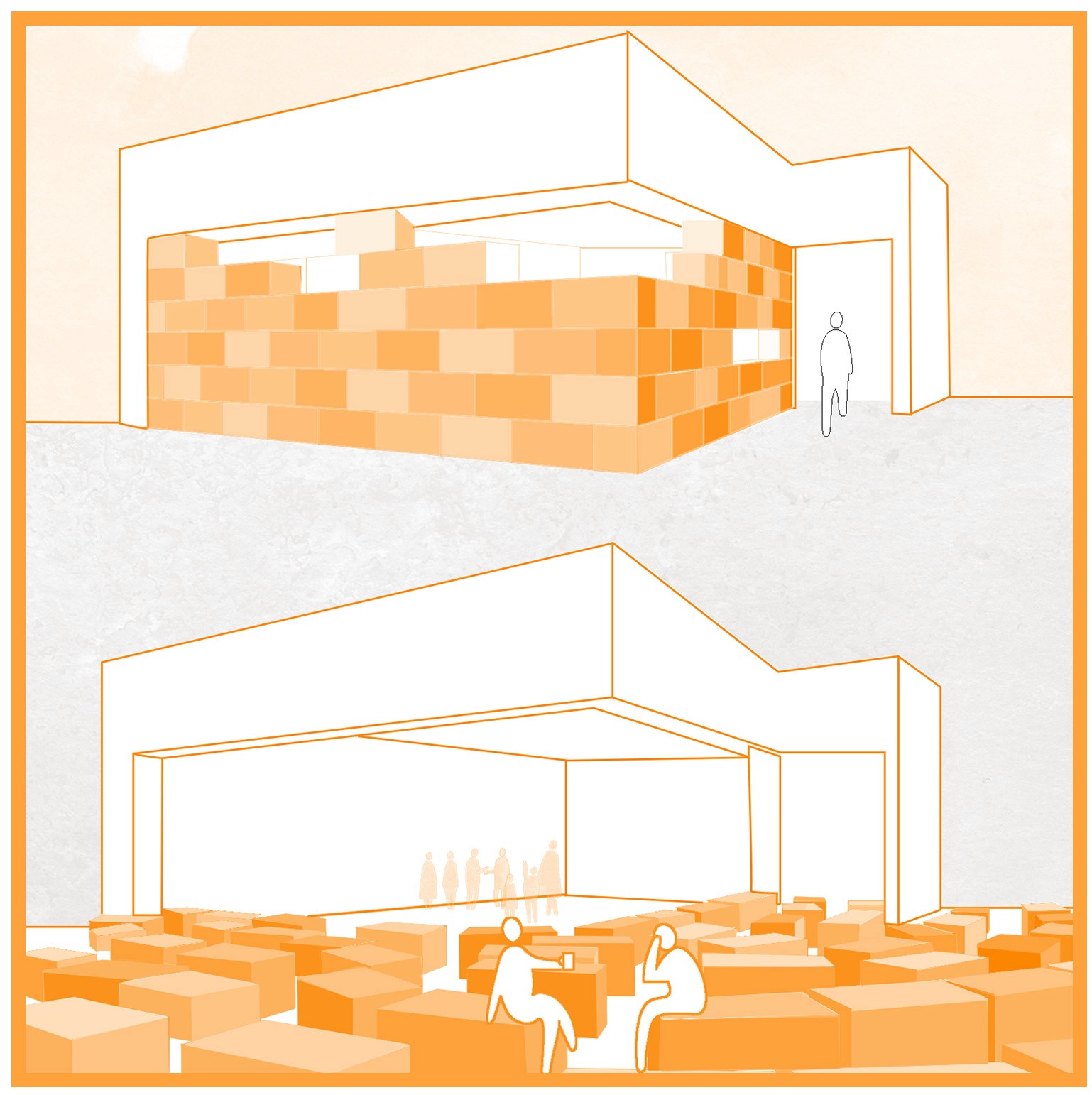


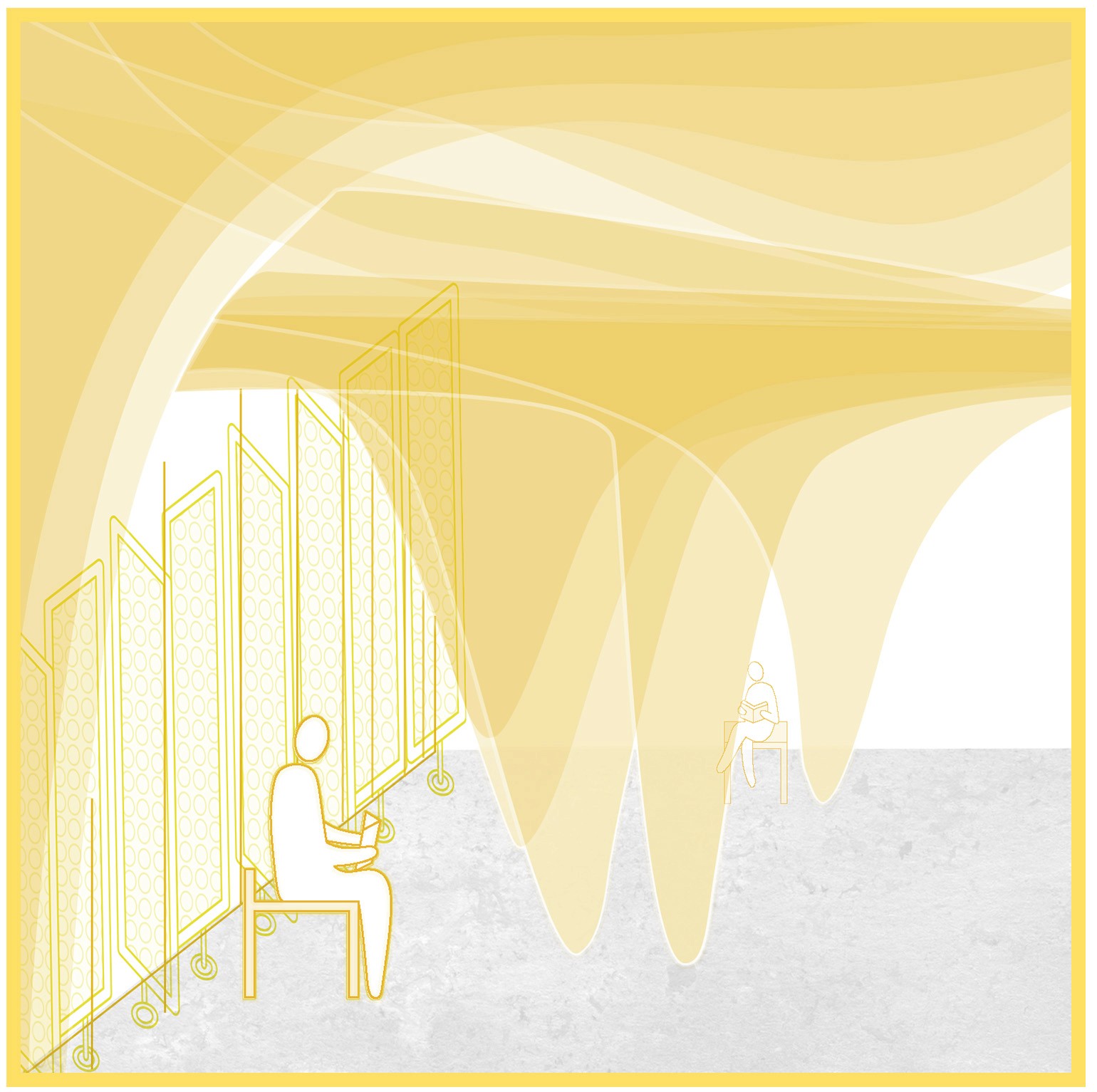


Working Lexicon of Neurodivergent Spatiality
A developing framework for understanding and designing neurodiverse environments. The lexicon identifies five spatial conditions: in-between spaces (yellow), slow spaces (pink), felt spaces (teal), soft boundaries (purple), and spaces of care (orange). Rather than fixed typologies, these categories overlap and interact, revealing how spatial experiences are shaped through movement, sensation, refuge, and connection.